Bicycles are among the most vulnerable vehicles on the road, and low-light visibility is one of the biggest safety challenges cyclists face. Reflective tape is one of the most effective and affordable ways to make a bike — and its rider — visible to drivers at night.
Why Reflective Tape Matters for Cyclists
According to the National Highway Traffic Safety Administration (NHTSA), nearly half of all fatal bicycle crashes occur between 6 PM and midnight. Most of these happen in urban areas where cyclists share the road with motor vehicles. Standard bike reflectors — the small plastic pieces mounted on pedals and wheels — meet minimum legal requirements but provide limited real-world visibility.
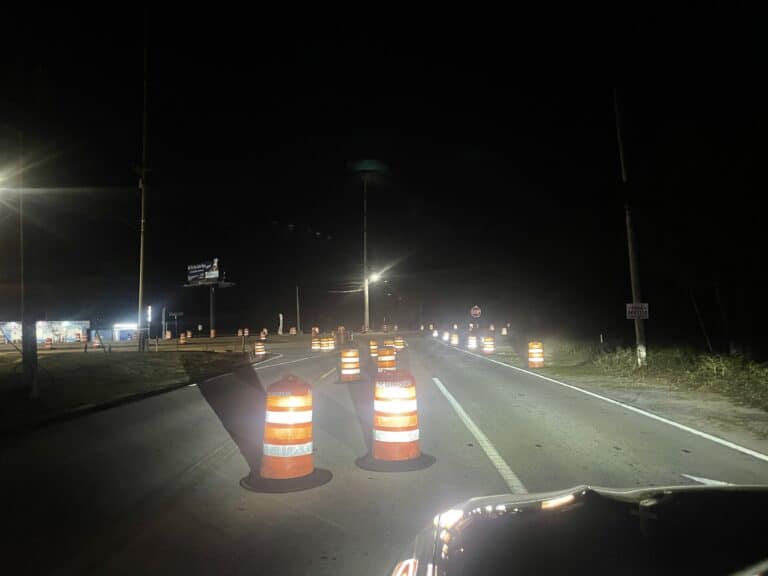
Retroreflective tape bounces light directly back toward its source (a car’s headlights), creating a bright glow visible from hundreds of feet away. Unlike battery-powered lights that can die mid-ride, reflective tape is always working, requires no charging, and lasts for years.
Best Places to Apply Reflective Tape on a Bicycle
Strategic placement maximizes visibility from all angles:
Frame: Apply strips along the down tube, seat tube, and top tube. Use 1-inch or 2-inch tape for maximum coverage. This makes the bike visible from the side — the most dangerous angle for intersection collisions.
Wheel Rims: Tape applied to both sides of the rims creates a distinctive spinning motion visible from the side. This “moving circle” effect immediately signals to drivers that they’re looking at a bicycle, not a stationary object.
Pedals and Crank Arms: The up-and-down motion of reflective pedals or crank arms is another strong visual cue that identifies a cyclist. This bobbing motion is unique to bicycles and recognized by drivers even at a distance.
Helmet: A strip across the back and sides of a helmet puts the reflective surface at driver eye level — the most natural place for drivers to look.
Forks: Front fork tape provides head-on visibility, which is critical for oncoming traffic at intersections.
Which Type of Reflective Tape Works Best on Bikes?
Not all reflective tapes are created equal. For bicycles, the key requirements are conformability (the ability to wrap around curved tubes) and brightness.
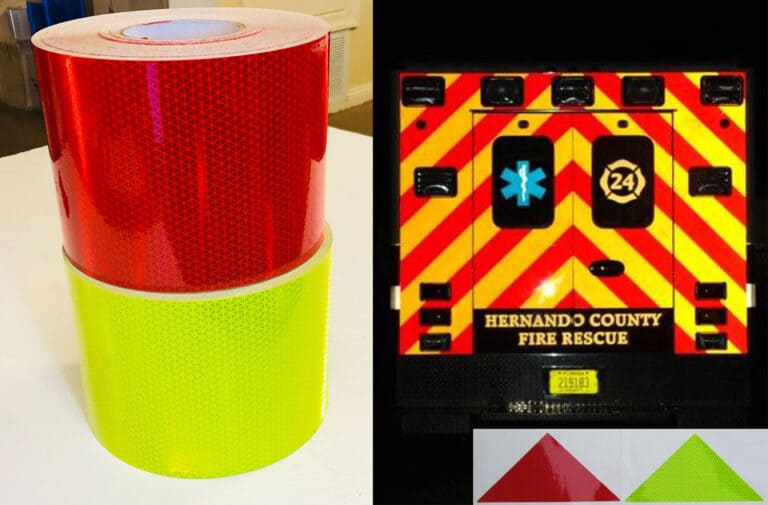
Oralite V98 Conformable Prismatic — This is the top choice for bicycle frames. V98 is an ASTM Type 5 microprismatic tape that conforms to curved surfaces without wrinkling or lifting. It’s the same technology used on emergency vehicles and is exceptionally bright. Available in white, lime, red, blue, and other colors.
Oralite V82 Prismatic — Another excellent option for flatter surfaces like fenders or panniers. Very bright and durable, though slightly less conformable than V98.
Engineer Grade (Type 1) — The most affordable option. Works well on flat surfaces and is adequate for casual use, but is significantly less bright than prismatic tapes. For serious nighttime riding, prismatic tape is worth the upgrade.
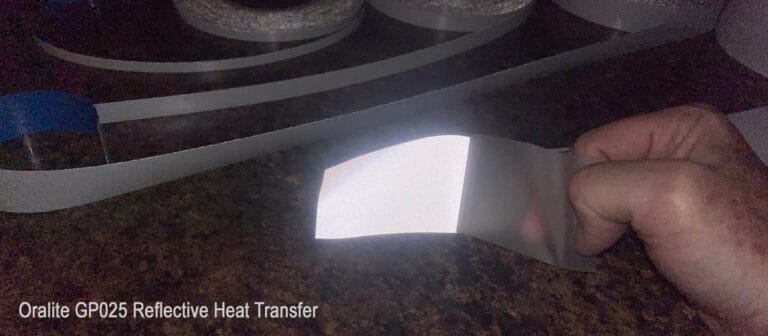
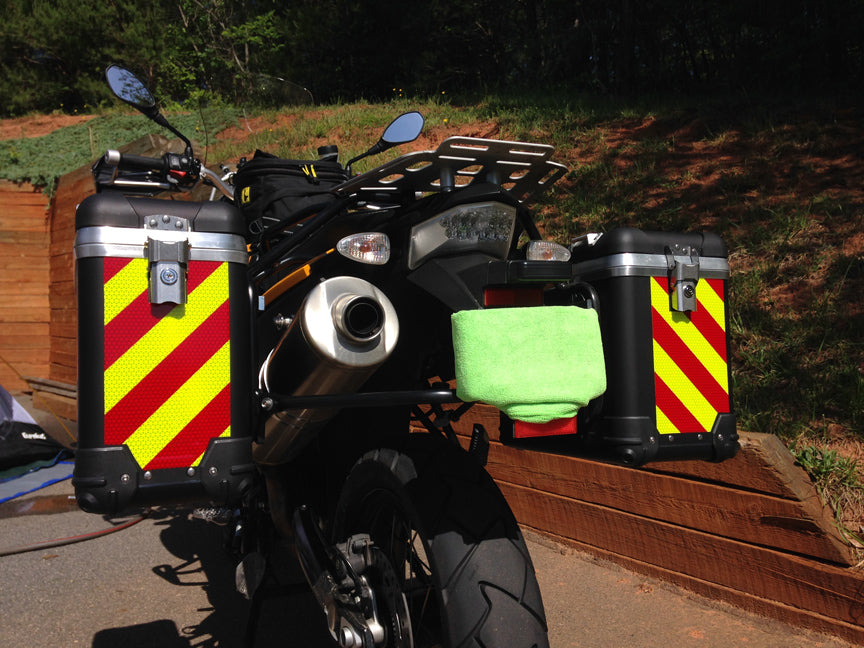
Garment Trim (GP440 or GP025) — For reflective tape on clothing, bags, or shoes, sew-on or heat-applied garment trims are purpose-built. The GP440 is a popular sew-on trim that can be attached to a cycling jacket, backpack straps, or ankle bands.
Application Tips for Bicycle Use
Surface Preparation: Clean the frame thoroughly with isopropyl alcohol before applying. Bike frames accumulate road grime and chain lube that will prevent proper adhesion.
Temperature: Apply tape at room temperature (above 50°F / 10°C). Cold application leads to poor adhesion and early peeling.
Pressure: Use firm pressure with a squeegee or credit card to eliminate air bubbles and ensure full contact with the adhesive.
Curved Surfaces: For tight curves around the frame tubes, use narrower strips (1/2 inch or 1 inch) which conform more easily than wider pieces. You can also make small relief cuts on the edges of wider tape to help it wrap without wrinkling.
Primer: For surfaces that are difficult to bond to (powder-coated frames, carbon fiber), applying a thin coat of DAP Contact Cement as a primer before the tape dramatically improves adhesion.
State and Local Bicycle Reflector Laws
Most U.S. states require bicycles ridden at night to have a front white light and a rear red reflector at minimum. Many states also require:
- A rear red light (in addition to or instead of a reflector)
- Side reflectors on wheels or pedals
- A front white reflector (sometimes satisfied by the headlight itself)
Reflective tape exceeds the reflectivity of standard plastic bicycle reflectors and is accepted as meeting or exceeding reflector requirements in most jurisdictions. However, it does not replace the legal requirement for a front headlight, which provides active illumination rather than retroreflection.
Reflective Tape vs. Bike Lights
Reflective tape and bike lights serve complementary purposes:
Bike lights are active — they emit light and make you visible even when no other light source is present (dark trails, unlit rural roads).
Reflective tape is passive — it works by bouncing headlight beams back to drivers. On roads with vehicle traffic, it’s extremely effective because there’s always a headlight source to reflect.
The smartest approach is both: active lights for dark conditions and reflective tape for all-angle passive visibility. The tape also serves as a backup if your battery dies mid-ride.
How Much Tape Do You Need?
A typical bicycle frame can be outfitted with about 3–5 feet of 1-inch reflective tape. For a complete setup including rims, helmet, and accessories, plan for about 8–12 feet. At the cost of a few dollars per foot for high-quality prismatic tape, making your bike fully reflective is one of the best safety investments a cyclist can make.
For reflective tape products suitable for bicycle use, visit tapefinder.com.


Steven Cole (Economics, MBA – University of West Florida , Business & Innovation – Stanford University) 25 years of experience in the reflective safety business. Specializing in vehicle accident and rear end collision reduction through increased visibility.