Updated for 2026. One of the most common questions we hear from customers is how long reflective tape will last once it’s applied outdoors. The answer depends on the type of tape, the surface it’s applied to, and the environmental conditions it faces. This guide breaks down the outdoor lifespan of every major type of reflective tape so you can choose the right one for your project.
Outdoor Lifespan by Tape Type
Reflective tape manufacturers rate their products for outdoor durability based on accelerated weathering tests. These tests are for the most part designed to test how long a film will retain reflectivity up to its rated level. As the tape deteriorates, so does its brightness. When brightness falls below the films rated candelas, it is considered time to replace it. These tests do not necessarily rate how long the film will hold on to a surface.
Here’s what you can expect from each type:
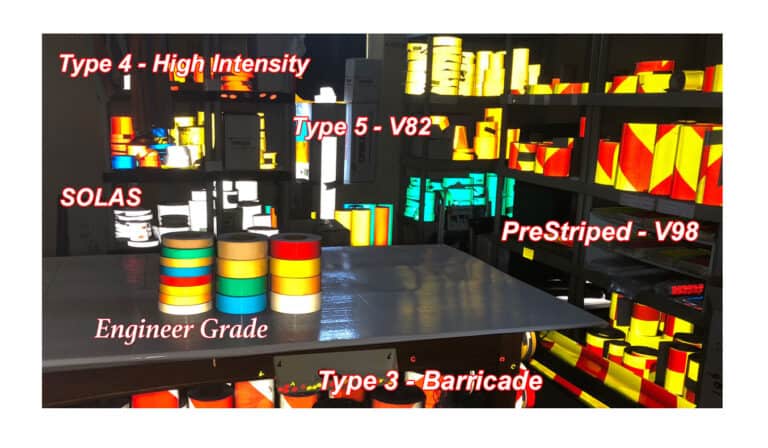
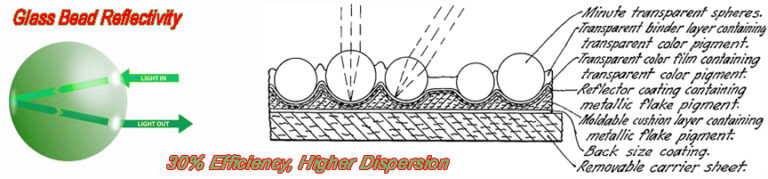
Type I — Engineer Grade (~3 years outdoor / up to 7 years for premium versions): The most economical option. Standard engineer grade tapes are rated for approximately 3 years outdoors. Premium flexible versions like the Nikkalite EG and Oralite 5650 Rapid Air can last up to 7 years due to their improved adhesive and film construction. These tapes use glass bead technology and are ideal for temporary signs, mailboxes, bollards, gates, and non-critical applications where cost matters more than longevity.
Type II — Super Engineer Grade (~7 years outdoor): A step up from standard engineer grade, super engineer tapes like the Nikkalite SEG use advanced glass bead technology to deliver brighter retroreflection. With an outdoor rating of approximately 7 years, they’re suitable for permanent signs in moderate-traffic areas, reflective vehicle graphics, and facility marking where more durability is needed than engineer grade provides.
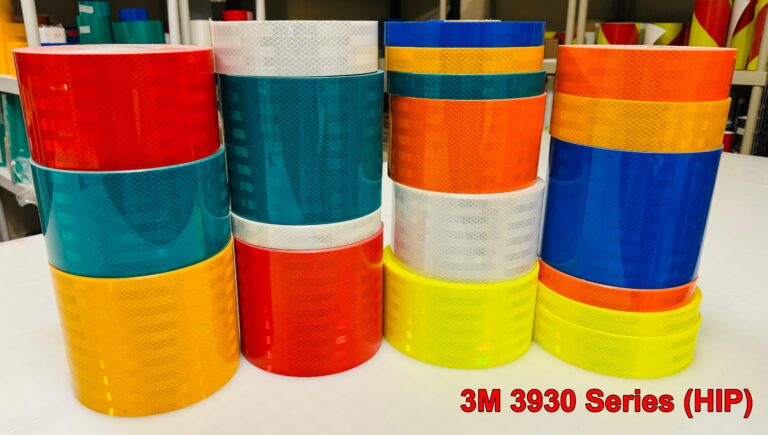
Type III — High Intensity Prismatic (~10 years outdoor): High intensity prismatic (HIP) tapes such as the Nikkalite HIM use encapsulated lens or microprismatic technology that delivers significantly more brightness than glass bead films. Their approximately 10-year outdoor rating makes them an excellent choice for highway signs, work zone devices, and commercial vehicle markings that need long-term performance. Nikkalite brand HIP tapes are among the most popular in this category.
Type IV — High Intensity Prismatic (~10 years outdoor): Similar to Type III but designed with wider observation angles, making the tape visible from more extreme viewing positions. The Nikkalite Type 4 HIP and Oralite 5930 work zone tapes fall in this category. Their 10-year outdoor rating and superior wide-angle performance make them ideal for high-speed roadway applications.
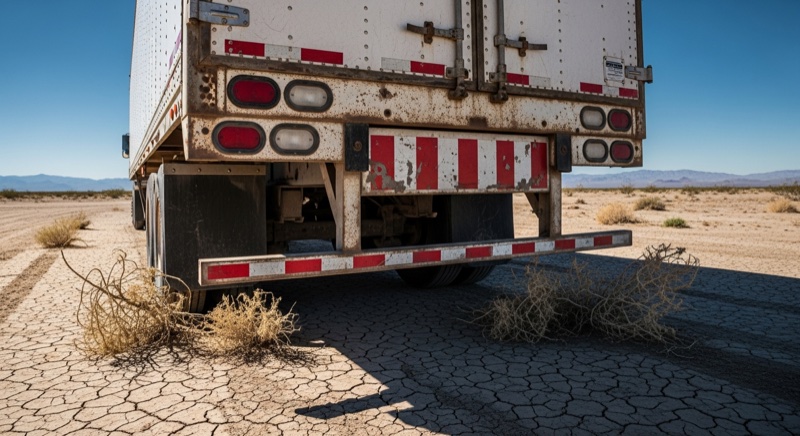
Type V — Metallized Prismatic / Oralite V82 (~10 years outdoor): The Oralite V82 is a metallized prismatic tape that combines excellent brightness with a 10-year outdoor rating. It’s commonly used for DOT-compliant trailer marking, sign sheeting, school bus markings, and applications that demand both high performance and long durability.
Type VIII / XI — Diamond Grade (~12+ years outdoor): The brightest and most durable reflective tapes available, including 3M Diamond Grade DG3 and Oralite 9900. These microprismatic films are rated for 12 or more years outdoors and are required for critical highway signs and high-speed roadway applications. Their superior wide-angle reflectivity means they perform well even at sharp observation angles where other tapes would appear dim.
Type IX — Fluorescent Prismatic / Oralite V92 Daybright (~5 years outdoor): Tapes like the Oralite V92 Daybright combine fluorescent color with prismatic retroreflection for maximum visibility in both daytime and nighttime conditions. Their outdoor rating of approximately 5 years is shorter than non-fluorescent films because the fluorescent pigments degrade faster under UV exposure. Despite the shorter life, they are the go-to choice when maximum daytime conspicuity is required — for example, on DOT-regulated trailers, emergency vehicles, and school zones.
Factors That Affect Lifespan
The manufacturer’s outdoor rating assumes ideal conditions. In the real world, several factors can shorten or extend the life of reflective tape:
UV exposure: Tapes in direct southern sun exposure will degrade faster than those in shaded or northern-facing positions. UV breaks down the adhesive and the optical layer over time.
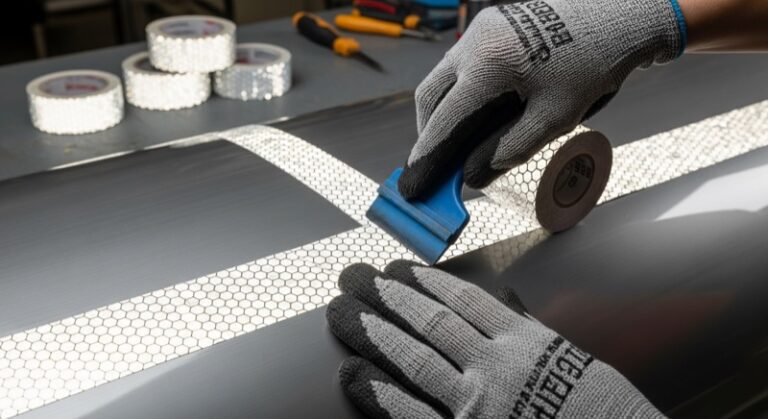
Surface preparation: Tape applied to a clean, dry, smooth surface will last significantly longer than tape applied to dirty, rough, or oily surfaces. Proper cleaning with isopropyl alcohol before application is critical.
Temperature extremes: Repeated freeze-thaw cycles can cause tape edges to lift. In extreme heat, some adhesives may soften. Acrylic-based adhesives (Class 1) generally handle temperature extremes better than rubber-based adhesives.
Chemical exposure: Tapes exposed to salt spray, industrial chemicals, fuel, or cleaning solvents may degrade faster. SOLAS marine-grade tapes are specifically formulated to handle harsh marine environments.
Physical abrasion: Tapes on vehicles, trailers, and equipment that get washed frequently, scraped by cargo, or hit by road debris will wear faster than tapes on stationary objects like signs or bollards.
When to Replace Reflective Tape
Even within its rated lifespan, reflective tape should be replaced if you notice any of the following:
- Visible cracking, peeling, or edge lifting
- Significant color fading or yellowing
- Reduced nighttime reflectivity (test with a flashlight from 50+ feet)
- Delamination (layers separating, especially on metallized films)
- Physical damage from impacts, abrasion, or vandalism
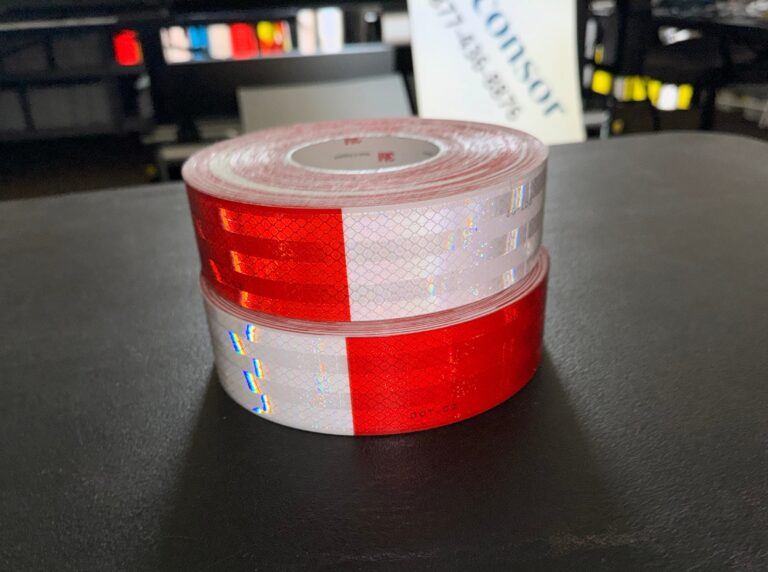
For DOT-regulated applications like trailer conspicuity tape, maintaining reflectivity above minimum thresholds is a legal requirement. The FMCSA can cite carriers for degraded conspicuity tape during roadside inspections.
Bottom Line
Choose the right tape type for your expected lifespan needs. For temporary projects (1-3 years), standard engineer grade is the most cost-effective. For applications that need 7-10 years, step up to super engineer grade or high intensity prismatic. For permanent installations that need to last a decade or more, invest in diamond grade films. And always remember — proper surface preparation and application technique will maximize the life of any reflective tape you choose.
Visit tapefinder.com to shop all types of reflective tape, or use our AI assistant to get a personalized recommendation for your application.


Steven Cole (Economics, MBA – University of West Florida , Business & Innovation – Stanford University) 25 years of experience in the reflective safety business. Specializing in vehicle accident and rear end collision reduction through increased visibility.